
Newsletter Subscribe
Enter your email address below and subscribe to our newsletter
Enter your email address below and subscribe to our newsletter
亚洲针织
 By白色
By白色
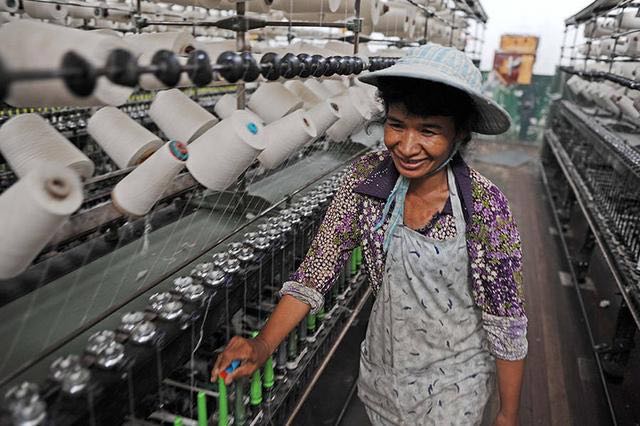
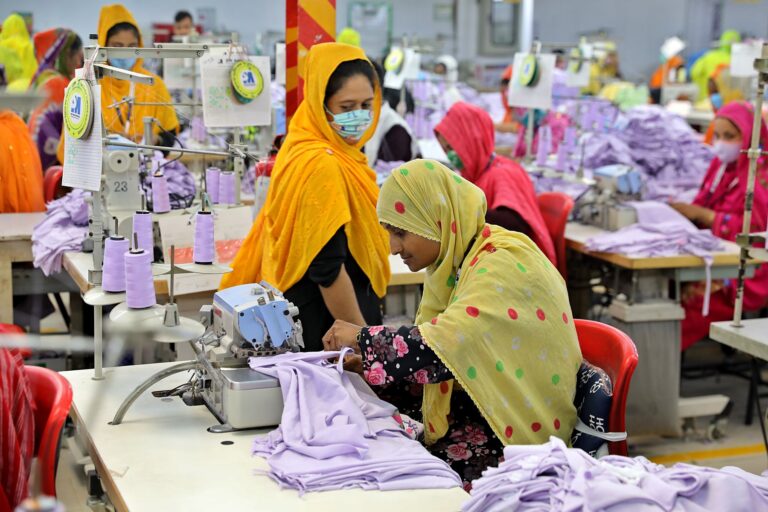
Cambodia garment industry challenges.Cambodia garment factory production line, Cambodia garment industry opportunities and challenges for global textile buyers
First of all, Cambodia has emerged as a cost-efficient textile production hub in Southeast Asia, compared with Singapore’s tech focus and Vietnam’s mature manufacturing system.
Its garment, footwear and travel goods sector supports millions of local jobs and dominates national export revenue.
Over the past two decades, GFT has become Cambodia’s top economic pillar, contributing 10% of GDP and more than half of all commodity exports.
Meanwhile, Chinese capital controls most local textile capacity. The first Chinese garment factories launched in 1996, and over 80% of the country’s 1,500+ GFT plants are now Chinese-funded.
Manufacturers set up Cambodian bases to avoid heavy US and EU tariffs, taking advantage of GSP trade preferences with a mature operation model: Chinese management paired with local assembly for Western brand orders.
Furthermore, order relocation from Myanmar and Bangladesh fueled explosive growth in 2025. 116 new garment factories opened in the first half, and garment export value jumped 22% to $5.283 billion USD.
In addition, the industry’s strong export performance masks three critical structural risks hitting manufacturers in 2026.
The US labels Cambodia an extension of China’s textile supply chain and imposed punitive tariffs in April 2025. The nominal tariff rate reaches 49%, with an actual 19% duty applied — far higher than Vietnam’s equivalent trade levies. If bilateral tariff negotiations fail, factories relying on American buyers will face severe revenue losses.
Even with a $208 monthly minimum wage in 2025, fast factory expansion created a worker shortage of 250,000 people. Local manufacturers compete intensely to recruit 210,000–220,000 new employees every year, pushing up labor costs and delaying order delivery.
Cambodia only handles garment assembly and relies entirely on imported raw materials. H1 2025 data confirms raw material imports rose 21.43%, nearly matching the 22% growth of garment exports. All core accessories including zippers, buttons and packing materials are mainly imported from China, which can fully suspend production once cross-border supply chains break down.
On the other hand, the Cambodian government and textile operators are rolling out strategies to turn risks into long-term development chances.
To reduce over-dependence on the US market, Cambodia expands trade cooperation with RCEP members, the Middle East and Africa. Shipments to RCEP economies accounted for 23% of total national exports in 2025, balancing regional order sources.
The official 2022–2027 GFT Industry Development Plan guides Cambodia to move beyond low-value OEM garment processing. It encourages manufacturing expansion into electronics assembly, mechanical parts and new energy equipment. In 2025, bicycle exports grew 17% and home appliance exports increased 13%.
Large-scale infrastructure projects solve long-standing logistics bottlenecks with high transport costs and low efficiency. The De Chong Fu Nan Canal, Phnom Penh New Airport and planned China-Laos-Cambodia Railway will greatly lift the competitiveness of Cambodia’s garment export supply chain.
To sum up, Cambodia’s garment industry stands at a vital transformation crossroad. It remains a cost-effective sourcing base for international apparel brands, yet investors must fully prepare for tariff fluctuations, labor shortages and supply chain upgrading demands. For local employees, talents with factory management, professional textile skills and foreign language ability will see outstanding career prospects in Cambodia’s growing manufacturing sector.



https://shorturl.fm/bKsHS
what’s that?