Newsletter Subscribe
Enter your email address below and subscribe to our newsletter
Enter your email address below and subscribe to our newsletter
Asian Knit
 By白色
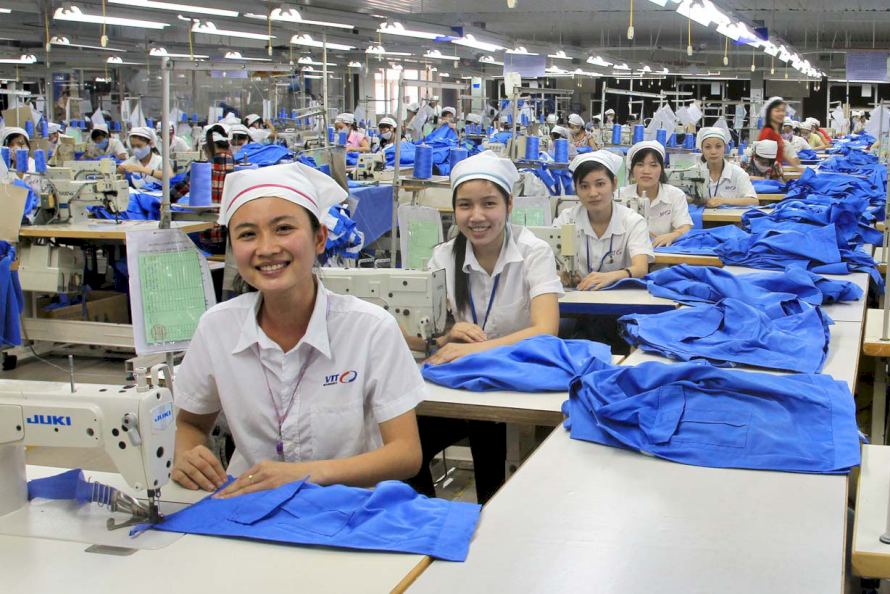
Vietnam textile garment exports surpassed 36 billion USD within the first nine‑month period amid volatile global market conditions. Domestic manufacturers are adjusting operational strategies to cope with shifting overseas buyer requirements.
Firstly, overall textile garment export revenue rose by 3.3% year on year. According to Cao Huu Hieu, General Director of Vietnam National Textile and Garment Group (Vinatex), the group recorded nearly 1.6 trillion VND revenue for the same period, completing 57.1% of its annual target. Its pre tax profit hit 336.6 billion VND, reaching 129.5% of plan with 218.7% year over year growth.
In addition to the overall export figure, the yarn segment stands out inside the group.
On the other hand, the garment business faces typical margin challenges.
In particular, yarn business turned out to be the group’s brightest performer. It generated 6.66 trillion VND revenue and over 381.8 billion VND in profit. All of Vinatex’s 12 yarn producing units achieved positive earnings and improved operational efficiency.
Meanwhile, garment remains Vinatex’s major profit contributor. It brought in 5.85 trillion VND revenue and 679.2 billion VND pre tax profit, delivering an 11.6% pre tax margin which beats the 10% internal target. Even so, profit levels differ greatly among subsidiaries. The whole sector faces a common dilemma: growing revenue paired with shrinking margins, caused by small batch complex orders, rising production costs and downward unit price pressure.
Beyond short term financial results, Vinatex has laid out a three pronged development roadmap.
First, strengthen weaving, dyeing and raw material capacity to improve local supply chains and lower import dependency.
Second, invest more heavily in machinery, automation and modern technology to boost productivity, develop new goods and move toward higher value product segments.
Third, advance digital management, data interconnection and end to end operational optimisation.
Apart from group performance, the whole sector still faces widespread headwinds.
The textile sector has entered a more difficult operating phase. International purchasers are imposing stricter requirements for fast lead times, competitive pricing, product quality, corporate social responsibility and sustainability standards.
Vu Duc Giang, Chairman of the Vietnam Textile and Apparel Association (VITAS), shared suggestions for local manufacturers. Firms should invest not only in scale and hardware but also build capabilities for global value chain participation. Practical moves include upgrading factories to international benchmarks, applying automation for higher labour efficiency, building domestic raw material bases and textile industrial clusters. Manufacturers are also encouraged to upgrade business models from simple cut make trim toward FOB and ODM.
According to Pham Van Quan, Deputy Director of Industry Department under Ministry of Industry and Trade, textile garment is Vietnam’s vital export pillar. This industry employs 1.86 million staff across more than 14,300 enterprises. Full year 2025 exports reached nearly 46.2 billion USD with a trade surplus above 20.7 billion USD. Vietnam keeps its position among world’s top three apparel exporters, with 52% added value rate for exported goods.
Quan stated authorities will cooperate with local governments, industry associations and enterprises on supplier capability building, supply chain links, tech renovation and labour training. He recommends companies assess supply chain risks, diversify products and client bases, expand local material sourcing and cooperate with tech enterprises to master core manufacturing equipment.
To sum up, Vietnam retains strong export volume momentum, yet profit‑margin compression and higher buyer thresholds become persistent pain points. For overseas buyers, Vietnamese factories are accelerating ODM capacity and local supply‑chain self‑sufficiency. If you are exploring alternative Southeast‑Asia apparel manufacturing bases, visit our **Cambodia factory page** to review factory audit and bulk‑order support resources.